
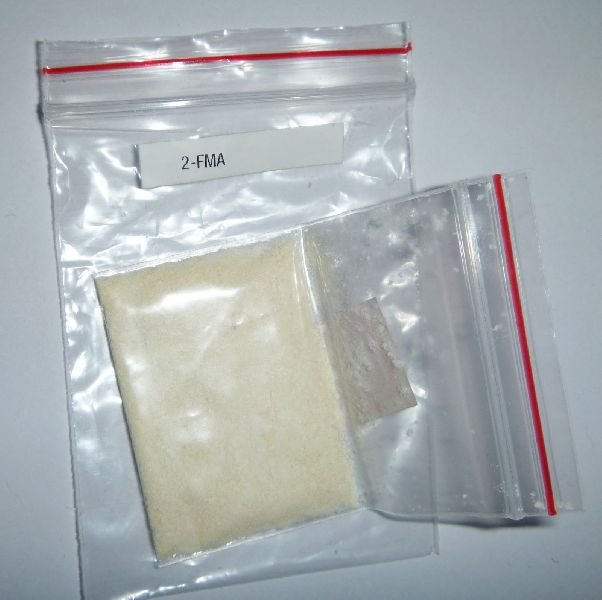
2-Fluoroamphetamine Buy 2-FA Online

Price range: $150.00 through $2,500.00
2-FA, or 2-Fluoroamphetamine, is a synthetic molecule of the amphetamine family. Molecules of the amphetamine class contain a phenethylamine core featuring a phenyl ring bound.
Understanding 2-FA (2-Fluoroamphetamine): A Synthetic Amphetamine Derivative
Chemical Classification and Structure
2-FA, or 2-Fluoroamphetamine, is a synthetic compound belonging to the amphetamine family, a well-known class of psychoactive substances. Amphetamines are chemically characterized by a phenethylamine core—a molecular framework consisting of a phenyl ring (a hexagonal arrangement of carbon atoms with alternating double bonds) attached to an amino group (NH₂) via an ethyl chain. This core structure forms the backbone of many stimulants and psychoactive drugs.
What distinguishes amphetamines from plain phenethylamines is the presence of an additional methyl group substitution at the alpha (Rα) position next to the amino group. This alpha-methylation modifies the molecule’s pharmacological profile by increasing its resistance to metabolic breakdown and enhancing its ability to cross the blood-brain barrier, thereby intensifying its stimulant effects.
Specific Features of 2-FA
2-FA is structurally defined as the 2-position fluorinated analogue of amphetamine. This means that a fluorine atom replaces a hydrogen atom on the second carbon position of the phenyl ring. This subtle yet significant modification impacts the compound’s chemical properties and biological activity.
Unlike some closely related analogues, such as 2-FMA (2-fluoromethamphetamine), 2-FA does not contain a methyl group on the terminal amine (RN), making its structure and function more closely aligned with amphetamine itself rather than its methamphetamine counterparts.
Pharmacological Implications
The addition of the fluorine atom at the 2-position can influence the drug’s interaction with neurotransmitter systems, particularly the dopamine and norepinephrine pathways. Although 2-FA has not been as extensively researched as traditional amphetamines, it is generally understood to act as a releasing agent for dopamine and norepinephrine. This means it promotes the release of these neurotransmitters and inhibits their reuptake, leading to increased concentrations in the synaptic cleft.
Such increases in dopamine and norepinephrine levels are associated with pronounced stimulating, euphoric, and motivating effects, which underlie the compound’s psychoactive properties.
Unlike its close analogue 2-FMA, 2-FA does not have a methyl group attached to the terminal amine (RN) of the amphetamine core, making it structurally and functionally more similar to amphetamine. 2-FA is the 2-position fluorinated analogue of amphetamine.
Although 2-FA has not been studied as extensively as traditional amphetamines, it is reasonable to assume that, like other substituted amphetamines with similar modifications (except for 4-FA), it primarily acts as a dopamine and norepinephrine releasing agent.
This means 2-FA increases dopamine and norepinephrine levels in the brain by binding to and partially inhibiting the transporter proteins that normally clear these neurotransmitters from the synaptic cleft. As a result, dopamine and norepinephrine accumulate beyond normal levels, producing stimulating, motivating, and euphoric effects.
Additional Information
| Product name | 2-FA |
|---|---|
| Chemical Name | 1-(2-Fluorophenyl)propan-2-amine |
| CAS | 1716-60-5 |
| Formula | C9H12FN |
| Molar mass | 153.196 g/mol |
| Purity | ≥99.8% |
| Appearance | white crystalline formula |
| Storage | -20° |
| Stability | 2 Years |
| Quantity | 1 Kg, 10 Grams, 100 Grams, 20 Grams, 50 Grams, 500 Grams |
|---|
Be the first to review “2-Fluoroamphetamine Buy 2-FA Online”
Related products

Research Chemicals
Research Chemicals

Research Chemicals

Research Chemicals

Research Chemicals

Research Chemicals

Research Chemicals

Research Chemicals
Reviews
There are no reviews yet.